Introducing Two New Company Directors

Introducing Two New Company Directors

Introducing Two New Company Directors
29 January 2024

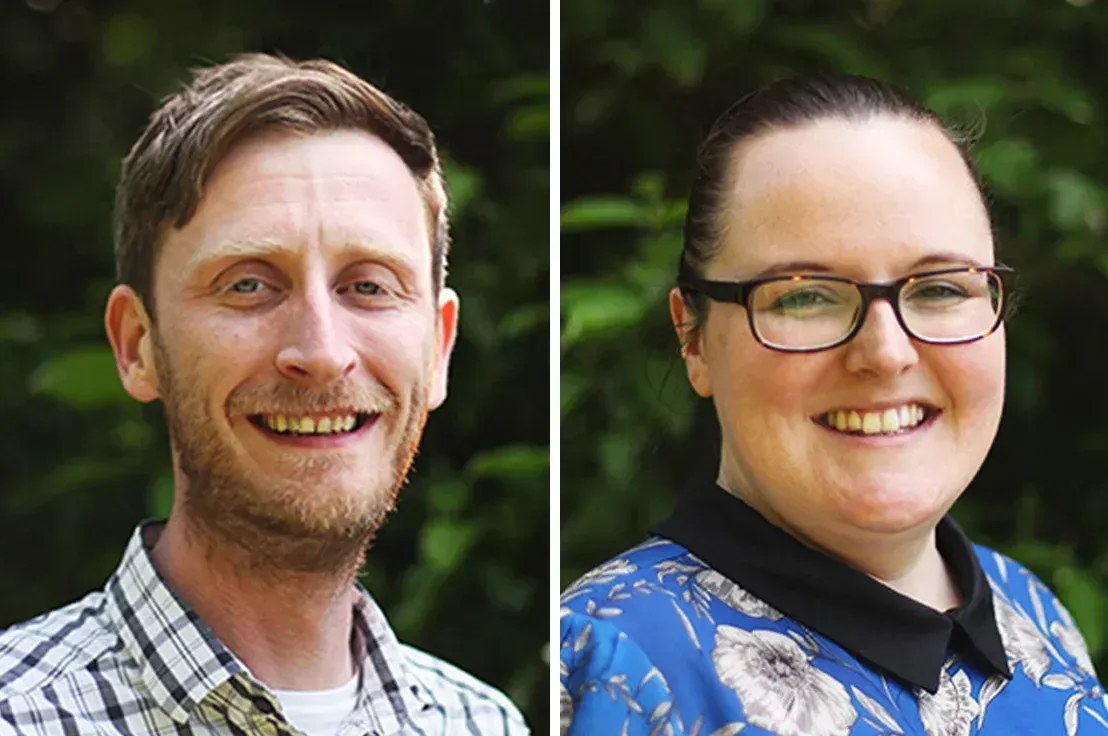
We are pleased to announce the recent appointment of two new company directors, Mike Hodgkinson and Lindsey Cunniff.

Mike Hodgkinson joined TEP in 2005, initially taking on the role of Graduate GIS and Graphics Technician. Over the years that followed, he worked within several teams, including Planning, Stewardship, Land Management, ICT and GIS. Since 2018, Mike has jointly managed two teams, helping support the development of the internal systems and infrastructure through the ICT Team, as well as establishing and expanding the GIS Team.

Mike commented, “Working across teams with so many talented staff has allowed me to learn and develop a wide range of skills and knowledge, and to build a sound understanding of the company, its markets, values and people. I have enjoyed developing the various new services via the Innovation Goal within TEP’s Business Plan and supporting the expansion into new markets. I will continue to support staff and grow the business through my new role as Director”.

Lindsey Cunniff  began working for TEP in 2005 as an Environmental Consultant for the then Environmental Regeneration Team. In the early stages of her career at the company, Lindsey actively participated in a diverse array of Land Management and Green Infrastructure projects, for a wide range of clients. As Lindsey progressed, her role expanded to encompass broader responsibilities in service delivery, overseeing the provision of Managing Agent services across multiple sites in the North West and Yorkshire.

Lindsey played a pivotal role in establishing TEP’s Milton Keynes office (now relocated to Market Harborough) and maintained active involvement in strategic management, more recently taking the lead in overseeing TEP’s Estate Management Framework for Homes England and spearheading the Land Management Team.

Lindsey remarked, “I am thrilled to be taking on the role of Director and continuing my commitment to TEP. My project, client and management experience will enable me to support staff and grow the business. Mike Hodgkinson and I went to college and university together and I am particularly pleased to be starting this new chapter of my TEP career alongside Mike, supported by the existing and former Directors”.

As Mike and Lindsey step up to the Board, Ian Grimshaw and Francis Hesketh will be stepping down after 27 years of dedicated leadership. Jo Boothroyd is also changing her role, and Ian, Fran and Jo will become Technical Directors, mentoring staff, providing advice to clients and technical expertise within their relevant professions. They will continue to offer guidance to the Board, ensuring that their combined years of management experience and business acumen remain firmly within the business. Our clients can be assured of a smooth continuation of TEP’s successful project delivery approach.

20 May 2026
Explore what the Energy Independence Bill could mean for renewable energy, planning reform and UK infrastructure projects.
19 May 2026
If you are planning a development, managing land, or need advice on great crested newts or other protected species, contact us today.
22 April 2026
Delivering major infrastructure in sensitive environments requires a coordinated approach, bringing together a range of expertise to understand place, manage risk and support informed decision-making. Our work on the North Hykeham Relief Road (NHRR) in Lincolnshire is a strong example of this in practice, with teams from across TEP working together to support the delivery of this long-planned scheme. A long-planned piece of infrastructure The NHRR forms the final section of Lincoln’s ring road, a scheme that has been identified in Local Plans for around twenty years. As the project progressed, it required careful consideration of environmental constraints, historic assets and landscape character, alongside the practicalities of delivering a major new road. Working alongside Balfour Beatty and the wider project team, we provided a range of services spanning heritage and archaeology, planning, landscape, ecology and arboriculture. A coordinated programme of assessment and support underpinned the development of the scheme. Our Historic Environment team established the baseline through desk-based assessment, consultation and phased archaeological evaluation. This work identified areas of interest including sites of prehistoric activity, the important Roman road of Ermine Street, and a potential Roman villa complex, providing valuable insight into the long-term history of the site. These findings directly informed the design process, helping to shape the scheme in response to the site’s archaeological and historical context. The team also assessed potential impacts on sensitive heritage assets, including listed buildings and conservation areas, ensuring that the historic environment was fully considered as the project evolved.
20 May 2026
Explore what the Energy Independence Bill could mean for renewable energy, planning reform and UK infrastructure projects.
19 May 2026
If you are planning a development, managing land, or need advice on great crested newts or other protected species, contact us today.
20 May 2026
Explore what the Energy Independence Bill could mean for renewable energy, planning reform and UK infrastructure projects.
19 May 2026
If you are planning a development, managing land, or need advice on great crested newts or other protected species, contact us today.
22 April 2026
Delivering major infrastructure in sensitive environments requires a coordinated approach, bringing together a range of expertise to understand place, manage risk and support informed decision-making. Our work on the North Hykeham Relief Road (NHRR) in Lincolnshire is a strong example of this in practice, with teams from across TEP working together to support the delivery of this long-planned scheme. A long-planned piece of infrastructure The NHRR forms the final section of Lincoln’s ring road, a scheme that has been identified in Local Plans for around twenty years. As the project progressed, it required careful consideration of environmental constraints, historic assets and landscape character, alongside the practicalities of delivering a major new road. Working alongside Balfour Beatty and the wider project team, we provided a range of services spanning heritage and archaeology, planning, landscape, ecology and arboriculture. A coordinated programme of assessment and support underpinned the development of the scheme. Our Historic Environment team established the baseline through desk-based assessment, consultation and phased archaeological evaluation. This work identified areas of interest including sites of prehistoric activity, the important Roman road of Ermine Street, and a potential Roman villa complex, providing valuable insight into the long-term history of the site. These findings directly informed the design process, helping to shape the scheme in response to the site’s archaeological and historical context. The team also assessed potential impacts on sensitive heritage assets, including listed buildings and conservation areas, ensuring that the historic environment was fully considered as the project evolved.