

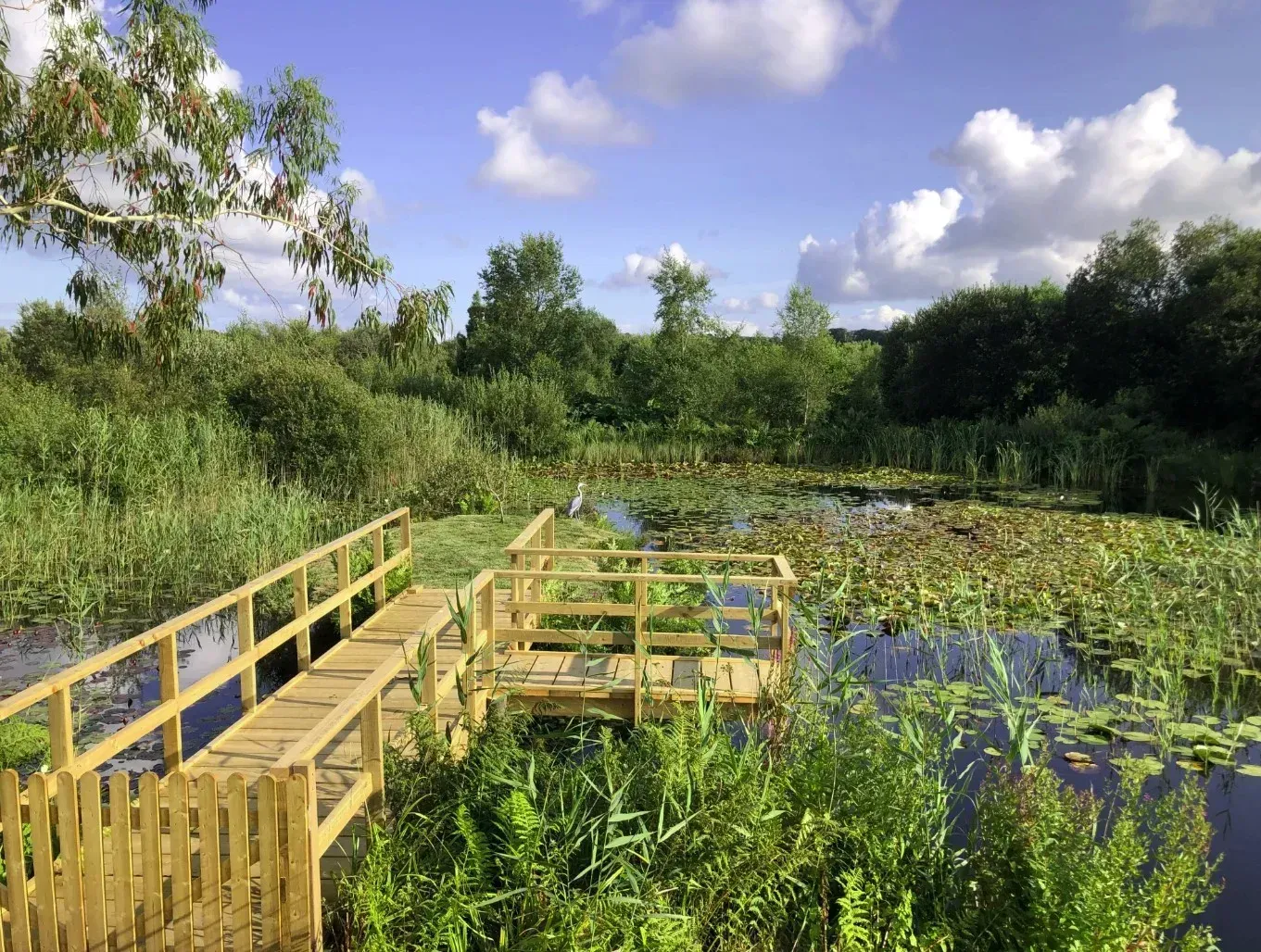
Navigating The New Biodiversity Net Gain Landscape

Navigating The New Biodiversity Net Gain Landscape

Navigating The New Biodiversity Net Gain Landscape
30 January 2024

In a monumental move towards ecological sustainability, significant changes in Biodiversity Net Gain (BNG) legislation are set to come into effect in England on February 12 th 2024. This pivotal date marks a turning point in the way businesses and developers approach environmental considerations, emphasising a commitment to biodiversity preservation and creating positive outcomes for both nature and communities.

Whilst attention is currently focussed on England because of the significant amount of new legislation that will come into force, similar approaches are found elsewhere in the UK. Scottish Government will also seek to quantify developmental impacts on biodiversity, using a metric; although it has decided to deliver this through policy rather than statute. In October 2023, Welsh Government announced that consideration of Net Benefits to Biodiversity and green infrastructure will be a policy requirement for most new development.

What is BNG?

The imminent legal alterations highlight a growing global awareness of the critical need to protect and enhance biodiversity. BNG, a concept gaining traction worldwide, mandates that almost all planning applications in England deliver an increase of at least 10% in biodiversity, either on-site or by off-setting. This initially applies to major developments but BNG rules for small sites (typically less than 1 hectare) will apply from 2 nd April 2024.

BNG requires developers to measure the biodiversity value of a site before and after their project using DEFRA’s Biodiversity Metric 4.0 calculator. This approach ensures the required enhancements needed to achieve the minimum 10% improvement in biodiversity can be identified. If it is not feasible to achieve the necessary biodiversity units within the development area, compensation off-site is needed, through habitat creation and/or enhancement.

Why is BNG Important?

By enforcing Biodiversity Net Gain, the new regulations seek to align economic progress with nature conservation. Companies will need to adopt strategies that actively enhance local ecosystems, fostering resilience and diversity in flora and fauna.

The significance of this legal shift extends beyond mere compliance; it represents a collective commitment to creating sustainable spaces where development and nature coexist, with aspirations for a more ecologically balanced future.

TEP – At The Forefront Of BNG

BNG is in TEP’s DNA! Our very first project in 1997 was to create woodland and grassland habitats on urban brownfield sites. One of them, Kenworthy Woods in south Manchester, has been so successful that it was designated as a statutory Local Nature Reserve in 2023. We have won prestigious awards for BNG, for example our work at Redrow Homes’ 300 house scheme at Heathlands in North Wales secured the Landscape Institute Biodiversity Award.

BNG is a team game and TEP has in-house expertise in ecology, trees, habitat design and implementation, planning, landscape management, costings and mapping. Our Planning team can advise on the process for submitting a planning application, identify planning applications that are exempt from BNG, and clarify the requirements to discharge the statutory BNG condition. Additionally, we can provide guidance on securing legal agreements (such as Section 106).

We conduct biodiversity reviews of land and are proficient in preparing detailed BNG assessments advising on habitat design, enhancement, and management. We are currently supporting a number of clients on a wide range of developments, including residential, commercial and infrastructure, advising on constraints and opportunities, and providing a robust strategy for delivering BNG.

In cases where the necessary biodiversity units cannot be achieved within the development boundary, compensation habitats can be established off-site. We can assist in locating and establishing such off-site habitats. We are helping landowners to optimise the habitat value of their lands for use as off-site compensation, facilitating their registration as a habitat bank.

Compensatory habitats, whether on-site or off-site, necessitate comprehensive management and monitoring for a minimum period of 30 years. TEP is equipped with experienced landscape managers who possess the expertise to implement the necessary management actions for habitat enhancements. This includes the development of detailed landscape management plans and monitoring strategies aligned with the objectives identified by the BNG metric calculator.

We also provide strategic BNG advice, for example need and supply assessments for local authorities and large corporations looking to understand the implications of their long-term development plans. We provide training and a bespoke advisory service for clients needing advice on the many rules surrounding BNG in England, and how to tailor schemes in Wales and Scotland to meet the different policy requirements.

If you have any questions about BNG, or would like to get in touch, please contact tep@tep.uk.com.

22 April 2026
Delivering major infrastructure in sensitive environments requires a coordinated approach, bringing together a range of expertise to understand place, manage risk and support informed decision-making. Our work on the North Hykeham Relief Road (NHRR) in Lincolnshire is a strong example of this in practice, with teams from across TEP working together to support the delivery of this long-planned scheme. A long-planned piece of infrastructure The NHRR forms the final section of Lincoln’s ring road, a scheme that has been identified in Local Plans for around twenty years. As the project progressed, it required careful consideration of environmental constraints, historic assets and landscape character, alongside the practicalities of delivering a major new road. Working alongside Balfour Beatty and the wider project team, we provided a range of services spanning heritage and archaeology, planning, landscape, ecology and arboriculture. A coordinated programme of assessment and support underpinned the development of the scheme. Our Historic Environment team established the baseline through desk-based assessment, consultation and phased archaeological evaluation. This work identified areas of interest including sites of prehistoric activity, the important Roman road of Ermine Street, and a potential Roman villa complex, providing valuable insight into the long-term history of the site. These findings directly informed the design process, helping to shape the scheme in response to the site’s archaeological and historical context. The team also assessed potential impacts on sensitive heritage assets, including listed buildings and conservation areas, ensuring that the historic environment was fully considered as the project evolved.
21 April 2026
Bringing the world of books to life for blind or visually impaired children
14 April 2026
TEP is proud to be partnered with the award-winning initiative Time for Geograph y, whic h showcases the importance of geography and the diverse careers it can lead to. Time for Geography is a free, online education platform reaching schools and universities across the UK. Through a series of engaging video resources, it brings geography to life in the classroom, connecting academic learning with real-world challenges such as sustainability, climate change, urban planning and environmental management. Our contribution to the initiative forms part of the platform’s Careers Collection, where our team shares insight into the varied and rewarding pathways geography can open up. These resources are designed to help students understand how their studies translate into professional roles, offering a clearer view of the opportunities available within the environmental sector. We’re delighted that this collaboration has been recognised with a Highly Commended Geographical Association Publishers Award , which celebrates the careers-focused videos and resources developed to guide students towards further education and careers in our industry. With an audience of over 2.5 million this year, Time for Geography is a powerful example of how education and industry can come together to inspire future talent, showing how a subject studied in the classroom can lead to meaningful, real-world careers. For many of our colleagues at TEP, that journey began with a simple interest in geography at school. Today, that interest has grown into careers spanning ecology, arboriculture, heritage, planning, landscape design and environmental management. By sharing these experiences, we hope to encourage the next generation to see geography not only as a fascinating subject, but as a pathway into work that makes a tangible difference. We’re proud to support an initiative that is helping shape the future talent pipeline for our sector, and to inspire the environmental specialists of tomorrow. Learn more and watch our video: 
22 April 2026
Delivering major infrastructure in sensitive environments requires a coordinated approach, bringing together a range of expertise to understand place, manage risk and support informed decision-making. Our work on the North Hykeham Relief Road (NHRR) in Lincolnshire is a strong example of this in practice, with teams from across TEP working together to support the delivery of this long-planned scheme. A long-planned piece of infrastructure The NHRR forms the final section of Lincoln’s ring road, a scheme that has been identified in Local Plans for around twenty years. As the project progressed, it required careful consideration of environmental constraints, historic assets and landscape character, alongside the practicalities of delivering a major new road. Working alongside Balfour Beatty and the wider project team, we provided a range of services spanning heritage and archaeology, planning, landscape, ecology and arboriculture. A coordinated programme of assessment and support underpinned the development of the scheme. Our Historic Environment team established the baseline through desk-based assessment, consultation and phased archaeological evaluation. This work identified areas of interest including sites of prehistoric activity, the important Roman road of Ermine Street, and a potential Roman villa complex, providing valuable insight into the long-term history of the site. These findings directly informed the design process, helping to shape the scheme in response to the site’s archaeological and historical context. The team also assessed potential impacts on sensitive heritage assets, including listed buildings and conservation areas, ensuring that the historic environment was fully considered as the project evolved.
21 April 2026
Bringing the world of books to life for blind or visually impaired children
22 April 2026
Delivering major infrastructure in sensitive environments requires a coordinated approach, bringing together a range of expertise to understand place, manage risk and support informed decision-making. Our work on the North Hykeham Relief Road (NHRR) in Lincolnshire is a strong example of this in practice, with teams from across TEP working together to support the delivery of this long-planned scheme. A long-planned piece of infrastructure The NHRR forms the final section of Lincoln’s ring road, a scheme that has been identified in Local Plans for around twenty years. As the project progressed, it required careful consideration of environmental constraints, historic assets and landscape character, alongside the practicalities of delivering a major new road. Working alongside Balfour Beatty and the wider project team, we provided a range of services spanning heritage and archaeology, planning, landscape, ecology and arboriculture. A coordinated programme of assessment and support underpinned the development of the scheme. Our Historic Environment team established the baseline through desk-based assessment, consultation and phased archaeological evaluation. This work identified areas of interest including sites of prehistoric activity, the important Roman road of Ermine Street, and a potential Roman villa complex, providing valuable insight into the long-term history of the site. These findings directly informed the design process, helping to shape the scheme in response to the site’s archaeological and historical context. The team also assessed potential impacts on sensitive heritage assets, including listed buildings and conservation areas, ensuring that the historic environment was fully considered as the project evolved.
21 April 2026
Bringing the world of books to life for blind or visually impaired children
14 April 2026
TEP is proud to be partnered with the award-winning initiative Time for Geograph y, whic h showcases the importance of geography and the diverse careers it can lead to. Time for Geography is a free, online education platform reaching schools and universities across the UK. Through a series of engaging video resources, it brings geography to life in the classroom, connecting academic learning with real-world challenges such as sustainability, climate change, urban planning and environmental management. Our contribution to the initiative forms part of the platform’s Careers Collection, where our team shares insight into the varied and rewarding pathways geography can open up. These resources are designed to help students understand how their studies translate into professional roles, offering a clearer view of the opportunities available within the environmental sector. We’re delighted that this collaboration has been recognised with a Highly Commended Geographical Association Publishers Award , which celebrates the careers-focused videos and resources developed to guide students towards further education and careers in our industry. With an audience of over 2.5 million this year, Time for Geography is a powerful example of how education and industry can come together to inspire future talent, showing how a subject studied in the classroom can lead to meaningful, real-world careers. For many of our colleagues at TEP, that journey began with a simple interest in geography at school. Today, that interest has grown into careers spanning ecology, arboriculture, heritage, planning, landscape design and environmental management. By sharing these experiences, we hope to encourage the next generation to see geography not only as a fascinating subject, but as a pathway into work that makes a tangible difference. We’re proud to support an initiative that is helping shape the future talent pipeline for our sector, and to inspire the environmental specialists of tomorrow. Learn more and watch our video: