Swansea Opportunity Tree Mapping
Swansea Council has set an ambitious goal: increase tree canopy coverage in the city centre to 20–25% by 2044. To support this, we were commissioned to map current canopy cover, identify opportunities for new tree and woodland planting, and help shape key green infrastructure policies across the city and county. The work contributes to wider sustainability and biodiversity aims, including the City Centre Green Infrastructure Strategy, the Swansea Local Nature Recovery Action Plan and the emerging county-wide Green Infrastructure Strategy.
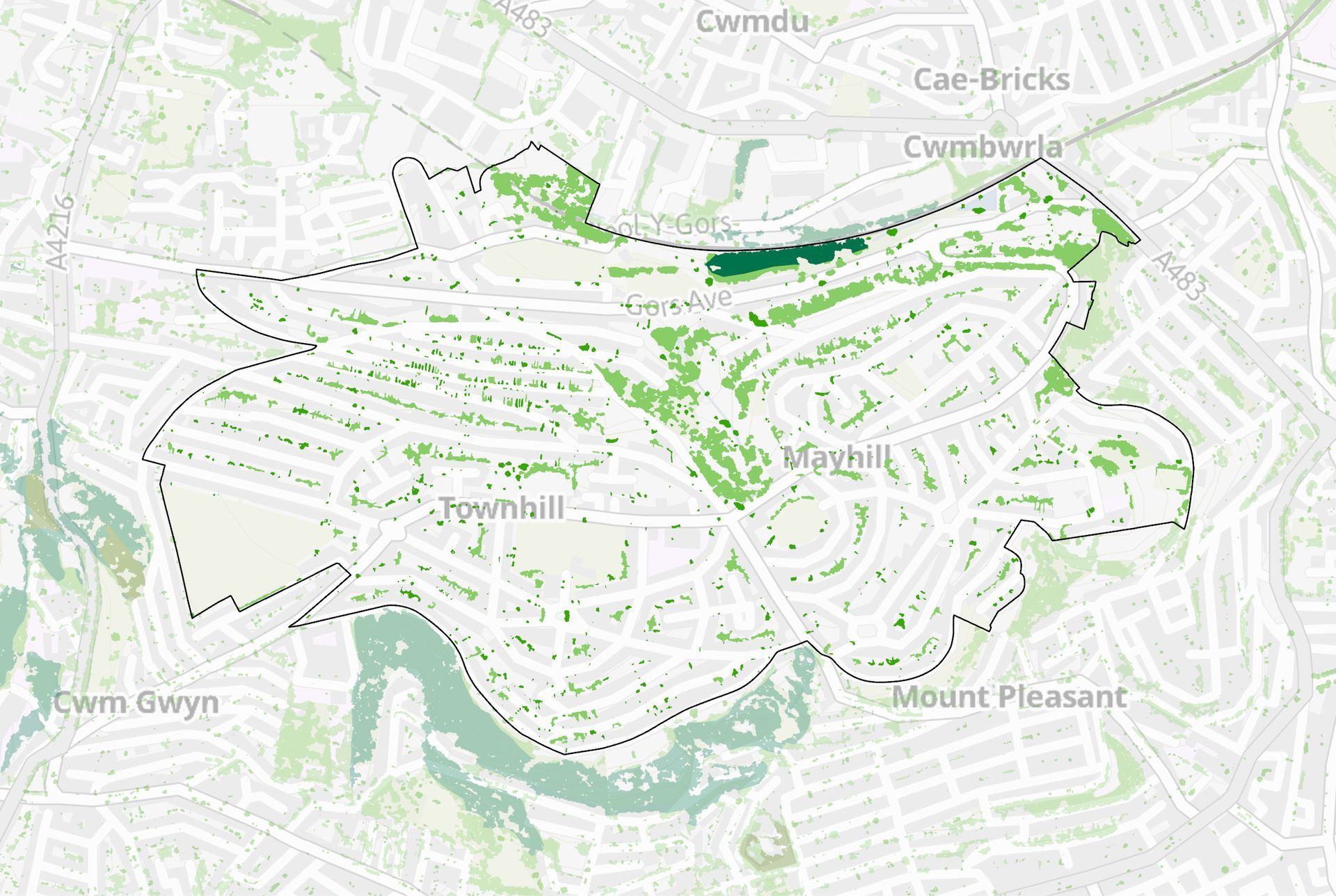
Our first step was to build an accurate baseline of existing tree canopy cover across the 32 county wards and 11 defined city-centre areas. Using datasets such as the Council’s tree inventory, the National Tree Map and local habitat information, we produced a detailed picture of individual trees, tree groups, woodland and ancient woodland. This baseline revealed areas with surplus and deficit canopy coverage, helping the Council understand where intervention would be most effective.
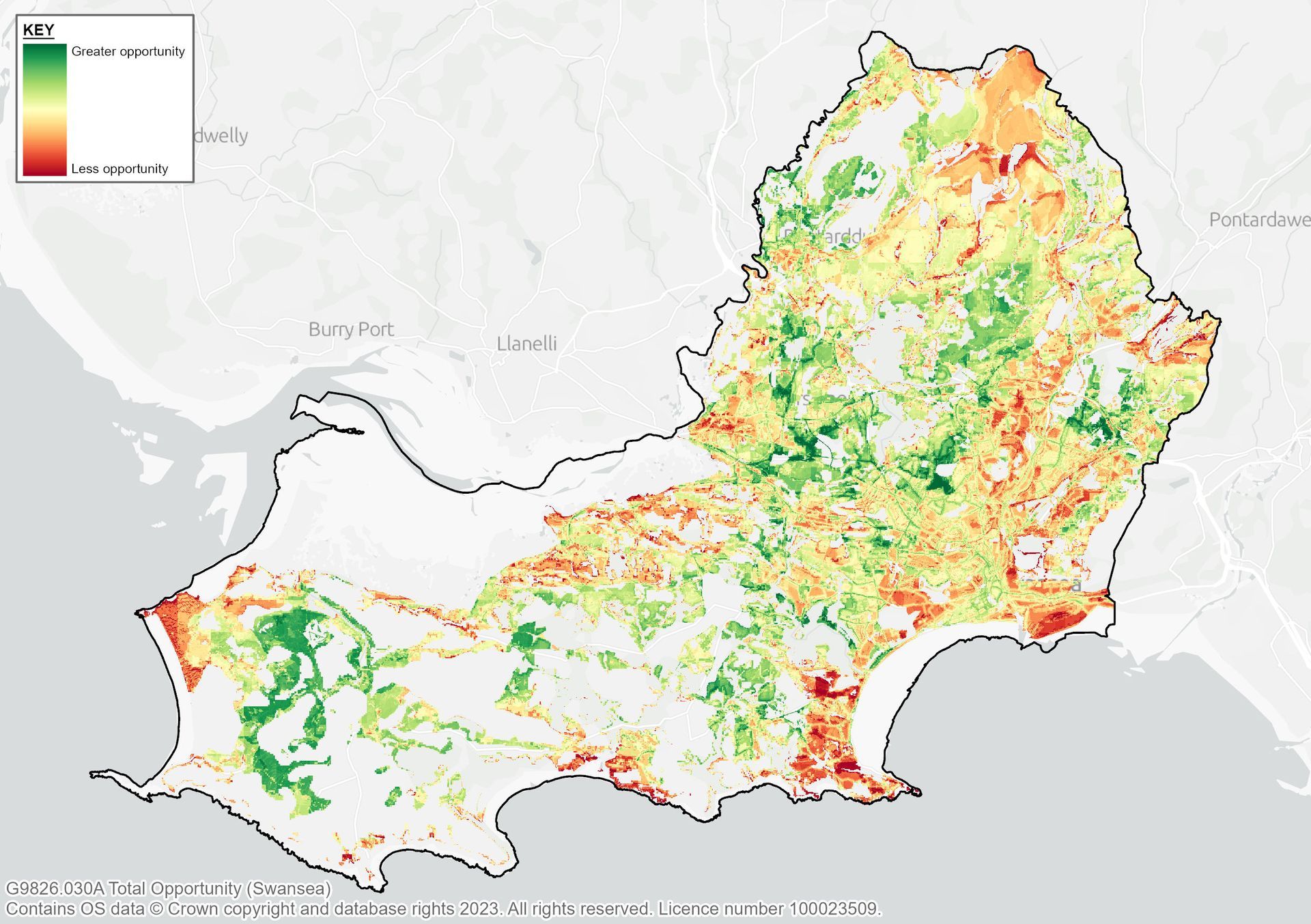
To identify future planting opportunities, we developed a Multi-Criteria Decision Analysis model that divided Swansea into 4.3 million 10m x 10m grid squares. Each square was scored against demand and feasibility criteria to highlight where new planting could deliver the greatest value. Working closely with Council teams, we focused on sites offering the best potential to increase canopy cover while supporting wider environmental goals. We also modelled how canopy cover could grow between 2023 and 2044, giving the Council a realistic projection of future change and a clear sense of how achievable the 20–25% target is. Alongside this, we carried out a carbon storage assessment to quantify the benefits of existing habitats and help inform long-term planting priorities.
The project resulted in a web-based Tree Planting Opportunity Map, carbon storage estimates and policy guidance for Swansea’s major green infrastructure strategies. A video user guide ensured that officers and partners could continue to use the tool confidently.
Together, these outputs provide Swansea with a strong foundation for strategic decision-making, supporting climate resilience, nature recovery and long-term green infrastructure planning across the city and county.